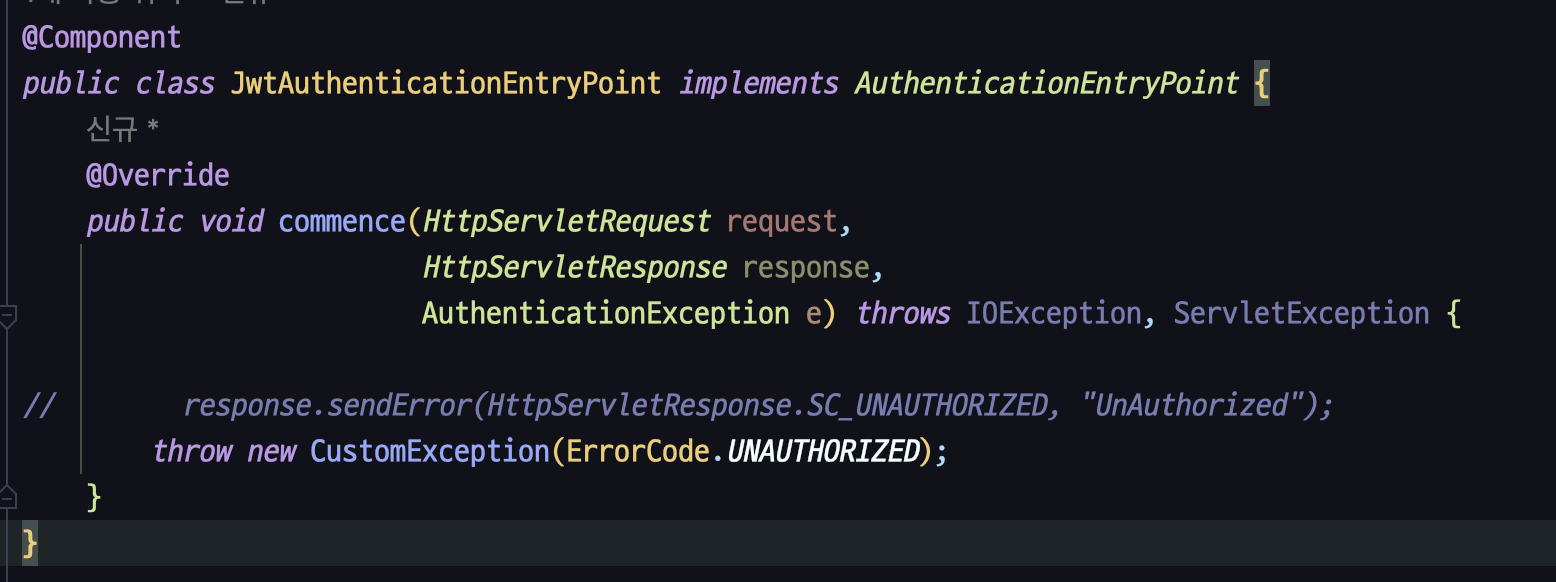
Spring Security와 JWT(JSON Web Token)를 결합하여 API 서버를 설계할 때 흔히 마주치는 시나리오 중 하나는, 인증되지 않은 사용자(예: Authorization 헤더에 JWT 토큰이 누락되었거나 유효하지 않은 경우)가 권한이 필요한 보호된 API에 접근했을 때 적절한 예외 응답을 클라이언트에 전달하는 것입니다.
이번 포스팅에서는 Spring Security의 예외 처리 아키텍처와 함께 AuthenticationEntryPoint의 역할 및 이를 커스텀 구현하여 예외 처리를 정교하게 구성하는 방법에 대해 알아보겠습니다.
1. Spring Security 예외 처리 아키텍처
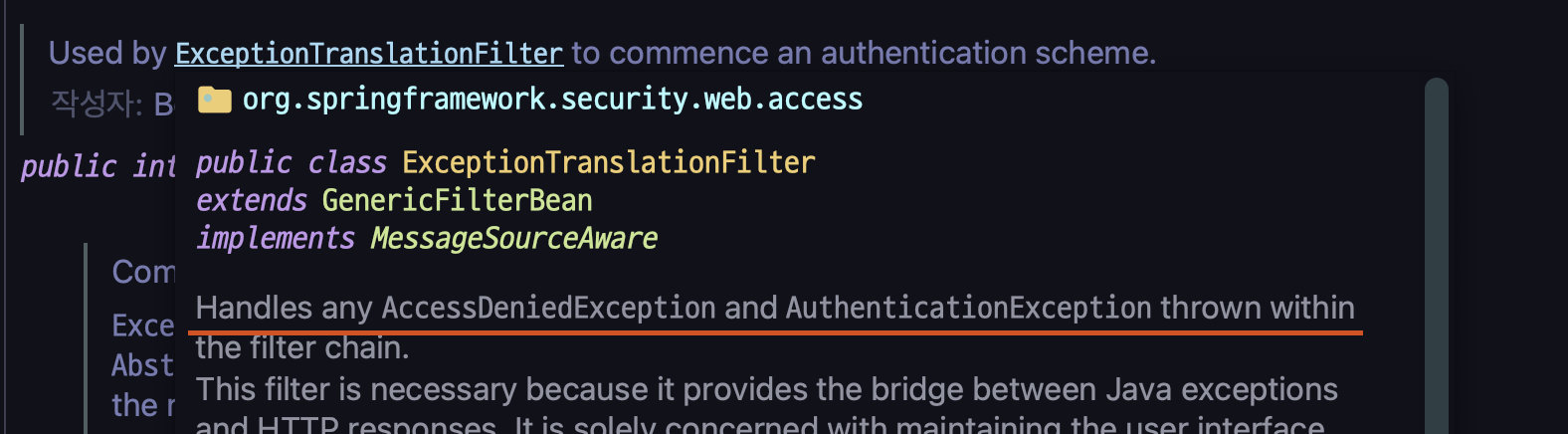
Spring Security는 기본적으로 수많은 서블릿 필터(Filter)의 체인으로 동작합니다. 이 중 인증 및 인가 관련 예외를 처리하는 핵심 필터가 바로 ExceptionTranslationFilter입니다.
[Filter Chain 흐름]
... ──> FilterSecurityInterceptor (인가 검사 수행)
             ↓ (예외 발생!)
       ExceptionTranslationFilter (예외 캐치 및 처리 분기)
        ├─ 1) AuthenticationException (인증 실패) ──> AuthenticationEntryPoint 실행 (401)
        └─ 2) AccessDeniedException (인가 실패) ──> AccessDeniedHandler 실행 (403)
ExceptionTranslationFilter는 필터 체인의 하단(보통 인가 처리를 담당하는 FilterSecurityInterceptor 바로 위)에 위치하며, 하위 필터나 컨트롤러 레이어에서 던져지는 예외를 가로챕니다.
예외 처리 분기 기준
AuthenticationException(인증 예외)- 상황: 익명 사용자(Anonymous User)이거나 로그인 정보가 유효하지 않은 상태에서 권한이 요구되는 자원에 접근하려 할 때 발생합니다.
- 조치:
AuthenticationEntryPoint를 호출하여 로그인을 유도하거나 에러 응답을 보냅니다.
AccessDeniedException(인가/접근 거부 예외)- 상황: 사용자가 로그인(인증)은 완료했으나, 해당 자원에 접근할 수 있는 필요한 권한(Role)이 없는 상태에서 접근하려 할 때 발생합니다.
- 조치:
AccessDeniedHandler를 호출하여 거부 처리(예: 403 Forbidden)를 보냅니다.
2. 커스텀 AuthenticationEntryPoint 구현
전형적인 웹 애플리케이션의 경우 인증 실패 시 로그인 페이지(Redirect URL)로 안내하지만, REST API 서버는 클라이언트에 리다이렉트가 아닌 공통 에러 포맷의 JSON 데이터와 HTTP Status Code 401(Unauthorized)을 직접 내려주어야 합니다.
이를 구현하기 위해 AuthenticationEntryPoint 인터페이스를 직접 구현하여 처리합니다.
CustomAuthenticationEntryPoint.java
import com.fasterxml.jackson.databind.ObjectMapper;
import org.springframework.http.MediaType;
import org.springframework.security.core.AuthenticationException;
import org.springframework.security.web.AuthenticationEntryPoint;
import org.springframework.stereotype.Component;

import javax.servlet.ServletException;
import javax.servlet.http.HttpServletRequest;
import javax.servlet.http.HttpServletResponse;
import java.io.IOException;
import java.util.HashMap;
import java.util.Map;

@Component
public class CustomAuthenticationEntryPoint implements AuthenticationEntryPoint {

    @Override
    public void commence(HttpServletRequest request,
                         HttpServletResponse response,
                         AuthenticationException authException) throws IOException, ServletException {

        // REST API 환경에 맞는 JSON 형태의 에러 응답 생성
        response.setContentType(MediaType.APPLICATION_JSON_VALUE);
        response.setStatus(HttpServletResponse.SC_UNAUTHORIZED); // 401 에러 설정

        final Map<String, Object> body = new HashMap<>();
        body.put("status", HttpServletResponse.SC_UNAUTHORIZED);
        body.put("error", "Unauthorized");
        body.put("message", "인증 정보가 유효하지 않거나 누락되었습니다. 요청 헤더를 확인해 주세요.");
        body.put("path", request.getServletPath());

        final ObjectMapper mapper = new ObjectMapper();
        mapper.writeValue(response.getOutputStream(), body);
    }
}
SecurityConfig.java 연동
작성한 커스텀 구현체를 Spring Security 설정 클래스에 등록해 줍니다.
@Configuration
@EnableWebSecurity
@RequiredArgsConstructor
public class SecurityConfig {

    private final CustomAuthenticationEntryPoint authenticationEntryPoint;

    @Bean
    public SecurityFilterChain filterChain(HttpSecurity http) throws Exception {
        http
            .csrf().disable()
            // ... 중략 ...
            .exceptionHandling()
            .authenticationEntryPoint(authenticationEntryPoint); // 커스텀 진입점 주입

        return http.build();
    }
}
Summary
ExceptionTranslationFilter 공식 문서의 핵심 내용에 따르면, 모든 AccessDeniedException 및 AuthenticationException 예외는 Spring Security 필터 체인 레벨에서 수집되어 일관되게 처리됩니다.
인증 예외가 발생할 때 리다이렉트가 아닌 API 규약에 알맞은 HTTP Status와 JSON 결과값을 내려주기 위해 커스텀 AuthenticationEntryPoint 설정을 적용하는 것은 모던 웹 애플리케이션의 필수 요소입니다.